 Mall Metrics
Management dashboards
Monthly sales and operations scorecard
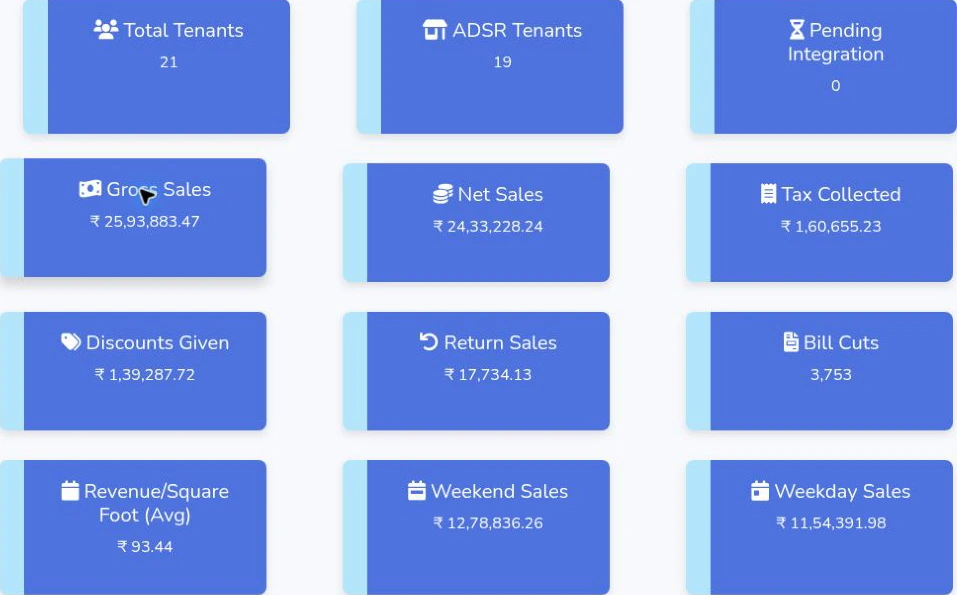
Read twelve operating measures together, including tenant coverage, gross and net sales, tax, returns, bills and the weekday–weekend split.
Bring one shop’s trading month into a leasing review. Tenant Monthly Sales places the shop, month and shop type beside its bill cuts, gross sales, returns, net sales, revenue per square foot and zero billing days. These fields let both sides discuss how the monthly total was earned and which component deserves a closer look.
Read twelve operating measures together, including tenant coverage, gross and net sales, tax, returns, bills and the weekday–weekend split.
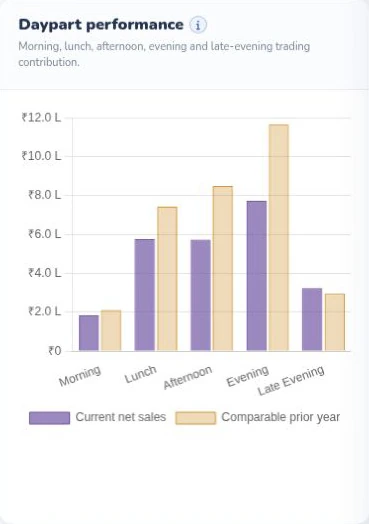
Read the contribution of each daypart to total net sales against the comparable prior year. The evening period is the largest contributor in this selection.
A shop can have steady bill counts while its net sales decline. Start with the gross figure and the returns column before assuming visitor demand fell. If revenue per square foot also changes, ask whether the store relocated or its recorded area changed. For a shopping center comparing space recorded in square feet with another property using square metres, agree a common area basis first. For a new shop or a unit undergoing refurbishment, check its comparable trading days before taking a monthly productivity figure into a renewal discussion.
Zero billing days provide a further lead for the follow-up. Check the store calendar and missing-day evidence before interpreting those days as lost trading. Bring a comparison month on the same basis, and one tenant-specific question, to see which part of the monthly record answers it.
Read how to interpret trading density · Review Tenant Monthly Sales in a demo
See how tenant submissions become a finance review and a management brief.